I have a fuzzy memory of this one time my dad asked my mom to make chhole for the millionth time. In my family, “chhole”, or channa, simply meant the gravy-simmered chickpea dish you generally see in Indian restaurants (fast food and regular), paired with bhature, the maida-based fried puffy bread, and sliced (not chopped, that’s saved for pav bhaji) red onions. But, making this always took forever. And maybe mom was just a bit tired of the same flavors, or she didn’t have everything needed to make it, or she just wanted to experiment.
So, when my dad asked my mom to make chhole for the millionth time, she introduced our family palate to her version of pindi chhole instead.

Quick history lesson: Pindi chhole are named after the town of its origin: Rawalpindi, which found itself on the Pakistani side of the border after Partition (ie, when India and Pakistan separated because we can’t have nice things and live together in unity). The flavors coming out of this part of the world are pretty similar, though, and sometimes gets lumped (maybe too generally) under Punjabi food.
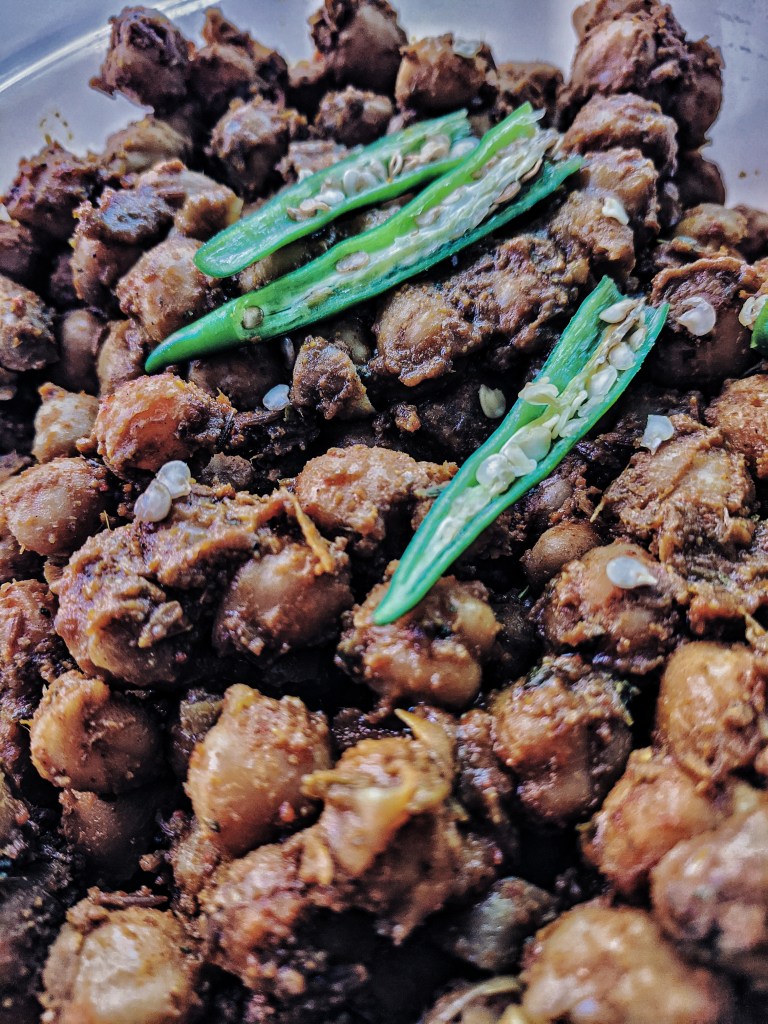
Essentially, pindi chhole are dry, intensely spiced chickpeas. They’re dark in color, spicy, salty, and tangy—basically, everything that defines the word chatpatta. They’re filling, and a little bit oily, but healthy in the way chickpeas are healthy for you. Excellent when paired with nimbu-pyaaz (lemoned onions) and bhature. Or pooris (fried puffy bread made from atta, a multigrain flour). Or chapatis or parathas (not fried everyday Indian bread). You get the point.
Back to the story: Ever since my dad first tried my mom’s version of pindi chhole, he’s been its biggest fan. He’s convinced her to put it on her regular rotation of lunch/dinner party menus. He tries to get her to make it super often. He’s even visibly disappointed when she switches things up and returns to the gravy kind (which she sort-of-secretly prefers).

No matter what, though, when she makes pindi chhole, she makes a massive batch. Because we’ve discovered that leftovers of this taste infinitely better than its already-delicious day-of self. Something or the other about the masalas getting time to sit and develop. So, pindi chhole nights will lead to pindi chhole lunches and second-night dinners, and sometimes even beyond.
Now. My mind is a wild thing. Every so often, a dish will pop into my head, triggered by absolutely nothing. Example, you say? I was standing on a subway platform in downtown Chicago last winter when I was suddenly gripped by an intense craving for idli-dosa. The visual, textures, smells, and flavors were so strong I actually started salivating.
That’s exactly what happened with pindi chhole. I had this sudden urge to make something chatpatta, they popped into my head, and I dutifully asked mom if she’d send me a recipe, all the while hoping it’d be an easy one.
And, wow, did it deliver.
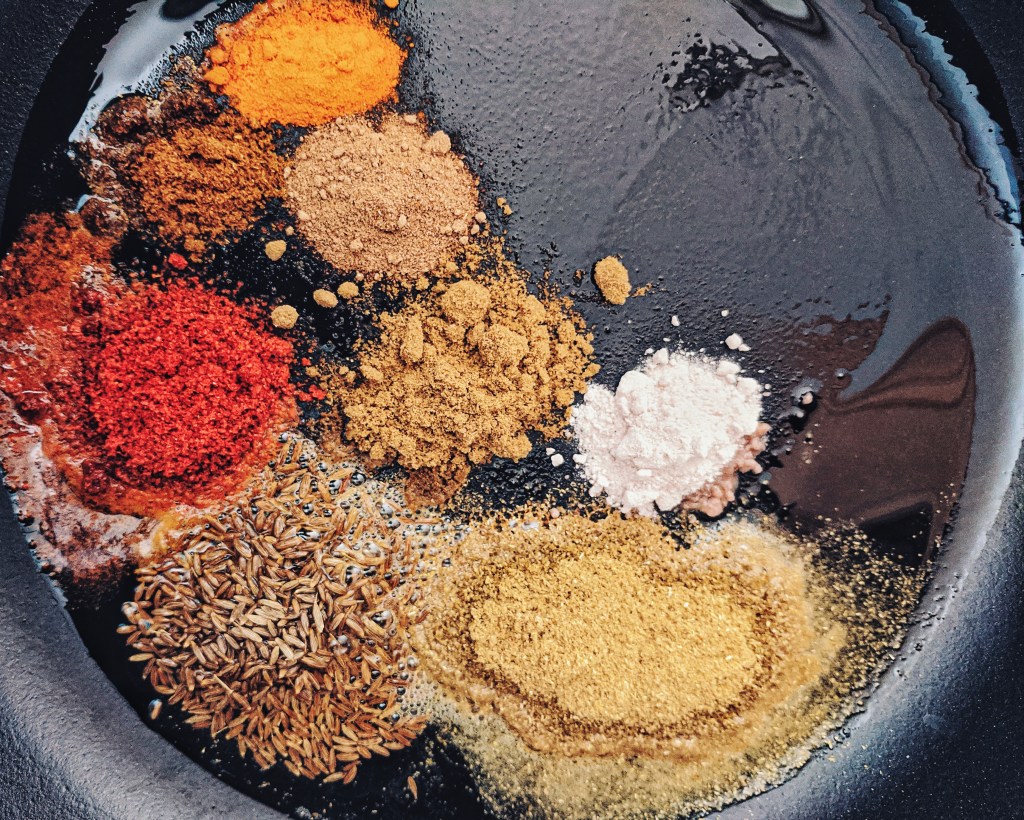
Because, here’s the thing: you just need cans of chickpeas, ginger, green chilies, and spices. That’s it. There are ten spices (including salt), all of them pretty essential to everyday north Indian cooking.
As I always do with any recipe from my mom, I also research the dish online. Not because I want to make sure mom hasn’t missed anything, but because I’m curious to see just how different our family versions are to others’.
At the end of the day, I’m looking to nail that tangy spice of pindi chhole; a kind of slow-burning, dark heat that curls up and settles deep inside you, satisfying in a way only a good, oily plate of channas can do. And hers does it best. So, here it is, as specific as I can make it (because of course I ended up adding pinches of masala here and there depending on what I tasted as I went along).
The secret: Letting the spices almost burn when you first cook them. And, making a massive batch for leftovers and an even more complex level of flavors.
What to eat it with: You can have it plain, as a snack. For something a bit more substantial, any carb goes great with it. The nights of, we’d have with parathas or rotis. Or, if it was slightly more special, puris or bhature. But leftovers were best enjoyed with plain old bread. Don’t forget the onions, by the way. The crunch is oh so satisfying.
MOM’S FAMOUS PINDI CHHOLE
Serves: 3-4.
Cooking time: 20-25 minutes.
Ingredients
- 4 tbsp your favorite cooking oil (I recommend olive or vegetable)
- 1 tsp jeera seeds
- 1-2 tsp red chili powder
- 3-4 tsp coriander (dhaniya) powder
- 1/2 tsp haldi powder
- 1 1/2 tsp kala namak (black salt, which looks pink)
- 1 1/2 tsp jeera powder
- 1 1/2 tsp khatai/amchur (dried mango powder)
- 1/2 tsp garam masala
- 1 tsp kasturi methi
- 2 15-oz. cans chickpeas, rinsed and drained
- 2 tsp ginger, peeled and grated (or julienned if you’re feeling fancy)
- 3-4 tbsp water
- 2-3 slit green chilies, for garnish (optional)
- 1/2 wedge of nimbu (lemon or lime, your pick) for garnish (optional)
- Cilantro, leaves only, for garnish (optional)
Tools
- A cast-iron pan is preferred.
Method
- Set your pan over medium-high heat and bring up to temperature. Add the oil, let it start shimmering, then add all the spices except the kasturi methi and salt.
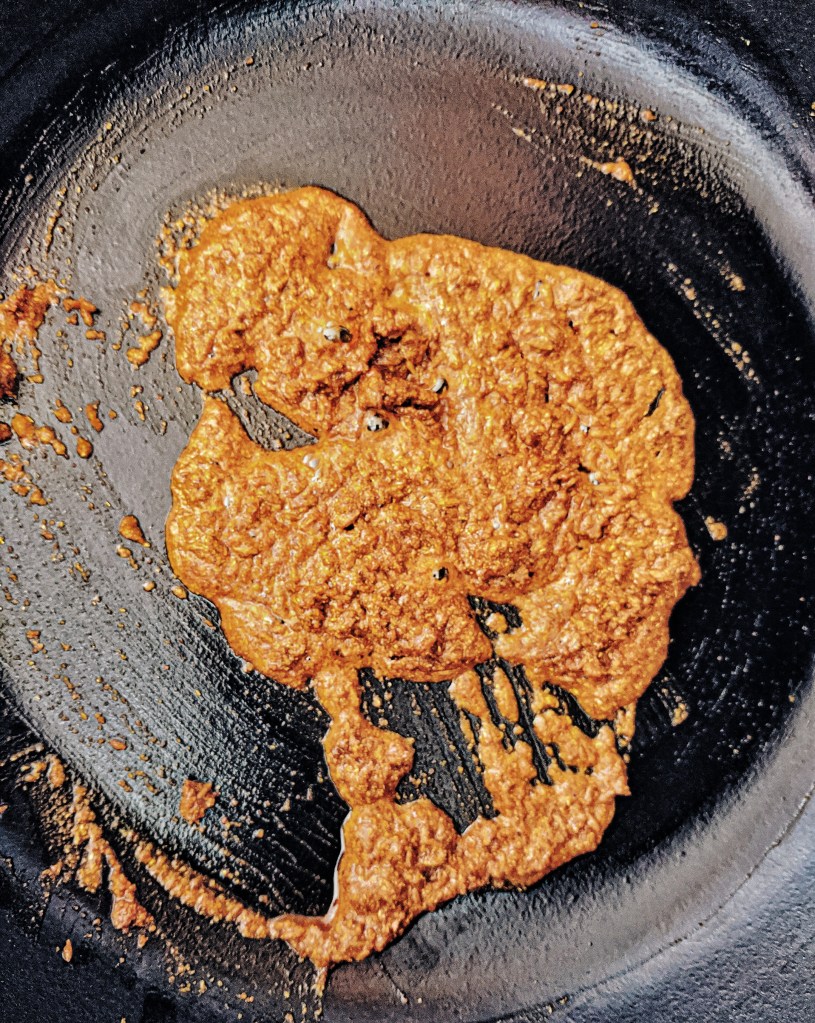
- Cook the masala for a few minutes (I recommend 5, so it really gets cooked well). Taste and adjust according to your preference: chili powder or garam masala for heat; kala namak for the tang; amchur for a sweet kind of tang; jeera powder or dhaniya powder to neutralize, or create more volume.
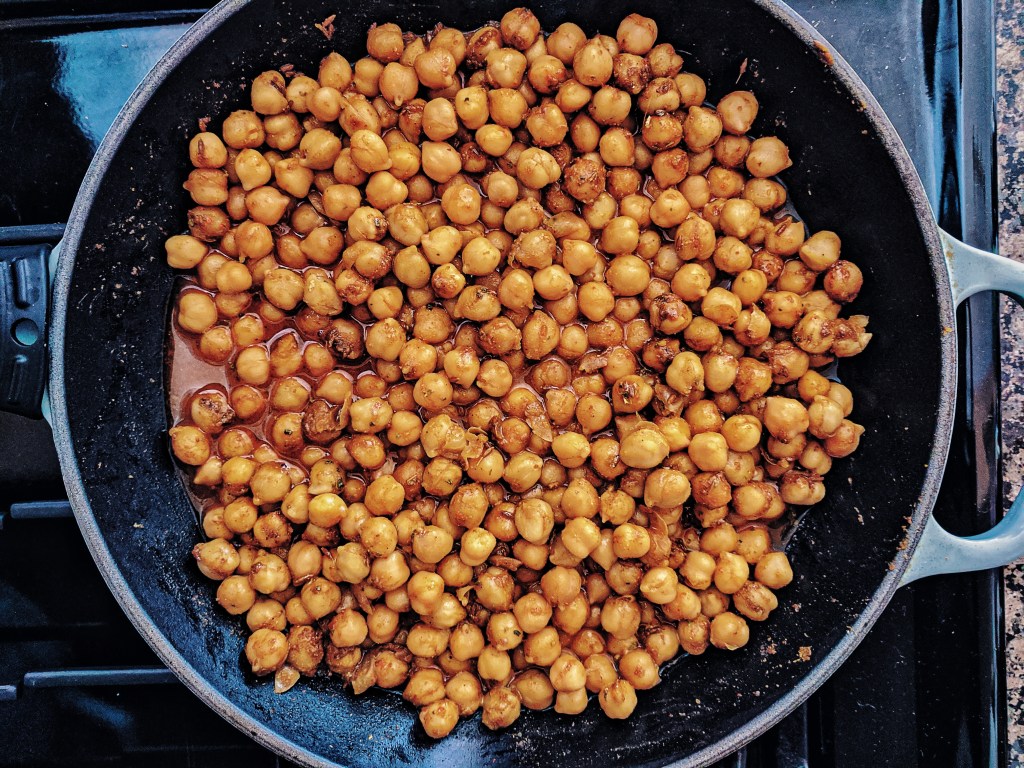
- Add the chickpeas and the ginger, and mix everything well so that the masala coats everything generously. If not, add more of the spices .
- Add the salt, then crush up the kasturi methi in your hands and add that too. Mix.
- Add the water, turn the heat down to medium-low), cover the pan, and simmer for about 15 minutes.
- Uncover and check the taste and texture of the chhole. You can still add more spices at this point. Once you’re satisfied, cook any remaining liquid down.
- Garnish with the cilantro, green chilies, and nimbu wedges, and serve.
Notes
- On the consistency: Mixing all the masalas together should get you a paste-like consistency: wet enough so that it will cling to the channa, but not form a gravy. If it’s too liquidy, add more dhaniya powder. If it’s too dry and crumbly, add a small amount of oil. Remember, this is a dry dish.
- On dried vs canned chickpeas: You can definitely use dried chickpeas instead of the canned stuff. Soak about 2 cups of chickpeas overnight, then boil them until they’re just a bit soft before you’re ready to start cooking.
- On all the tasting I’m telling you to do in the recipe: I’m a massive fan of tasting as you go along. Especially when you’re working with Indian spices. Don’t forget to do this, because you want to make sure you’re getting the flavors you need. This will also prevent you from adding too much masala and then being stuck with a dish that gives you heartburn (true story), because spices intensify in flavor when they’re cooking. So don’t go dumping too much chili or garam masala unless you can handle it.
- On that tiny amount of water: The point of this step is to create a steam effect, so that the spices touching the bottom of the pan don’t burn (or burn less), and to help the channa cook through a little better.
- On the masalas: I’m going to eventually get around to explaining all the masalas as I learn about them more, but in the meantime, the ones above are pretty much your staple set for north Indian cooking. All of these are easily available at your local Indian store, at Whole Foods, or on Amazon. But if you need some substitutions, here you go:
- For amchur: A squeeze of lime will add the sourness you get with amchur. Add this at the end, however, not when you’re first cooking all the spices. On an aesthetic note, amchur when cooked turns everything dark (which is why this dish is darker than your gravy kind of channa). If you take it out, your pindi chhole will look lighter than mine. And that’s still very ok.
- For kala namak: You cannot, unfortunately, sub in regular NaCl, because even though it shares a name/classification, kala namak is not just salty. It’s a processed salt that has other flavors, that make you literally smack your lips from the tang. Your best bet in a pinch is to add some Himalayan pink salt (or, fine, regular salt) with a tiny bit of lime juice. And then get online and order a bottle/packet of this stat. If you’re subbing out both this and the amchur, watch the salt and lime levels in the dish.
- For kasturi methi: a very, very small amount of fenugreek seeds (added in the beginning with the spices instead of later), or simply leave it out. Kasturi methi is used pretty commonly in Punjabi dishes, if sparingly. The way I think of it is a little weird so bear with me a bit: because it’s dried leaves, it’s pungent, and slightly bitter, which settles down the super bright and sharp flavors of the powders that are used in Indian cooking. The interwebs say celery leaves are a decent substitute, which you could also try if you wanted. Dry those out and crush them, and then add a tiny, tiny bit to your dish.
 pass the pepper
I’ve never had this but it made my mouth water!
The idea of a dish that tastes even better the second or third day is also something we see with Mole in Mexico, we call it the “recalentado”, which means the re-heated dish. Does it matter how you heat it up again? Do you? For mole, the ideal thing is to re-heat it in the same pot you made it in. Because it takes so long for it to cool down (depending on the size of the batch) it makes sense. I found that it definitely doesn’t taste the same if we just microwave it XD
LikeLike
We’ve always just taken the leftovers once dinner’s done the first night and stored them in the fridge in Tupperware containers! How do you store the mole when you’re making such big batches, does it go into the fridge or stay out and covered?
We’re definitely fans of reheating on the stove though, and not the microwave (unless we’re feeling super lazy).
I also love that there’s an official term for this phenomenon in Spanish!
LikeLiked by 1 person
The first night it stays out just covered and after that it’ll go in the fridge in the same pot (if it fits in the fridge; I’ve seen my aunt take off shelves in the fridge so that the pot can fit).
And yes! I love it when there are specific words for specific things like this 😃
LikeLiked by 1 person
Wow. That’s so interesting! I’m guessing the chemical reactions that can take place when it’s not hot or cold really make a difference.
LikeLiked by 1 person
This is a terrific recipe, quick and easy to make. I loved it with roasted veggies and cheese in a tortilla. Please put the English names of the spices in parentheses so that English-speaking readers see that they probably own most of the spices if they like Indian food. I want everyone to try these delicious chickpeas! And I would love to try more of your family recipes.
LikeLike