Do you have favorites? A character, movie, scene, drive, trip, author, interaction, memory, whatever, that you enjoy above all others?
I don’t. If you ask which insert-topic-here I like best, there’s a 99% chance I can’t tell you. Call it skepticism of the concept of timeless favorites, or plain indecision (who’re we kidding, though, we know which one it is).
But there’s a 1% chance your question will get a concrete answer out of me. Because one thing I’m absolutely sure about:
I. Love. Pav Bhaji.
If you don’t know what pav bhaji is, it is this: a gorgeous combination of carbs and fat and heat and spice and carbs and fat and depth and mess and carbs and fat and textures, all packaged in an ugly exterior. And carbs and fat, in case you missed that.
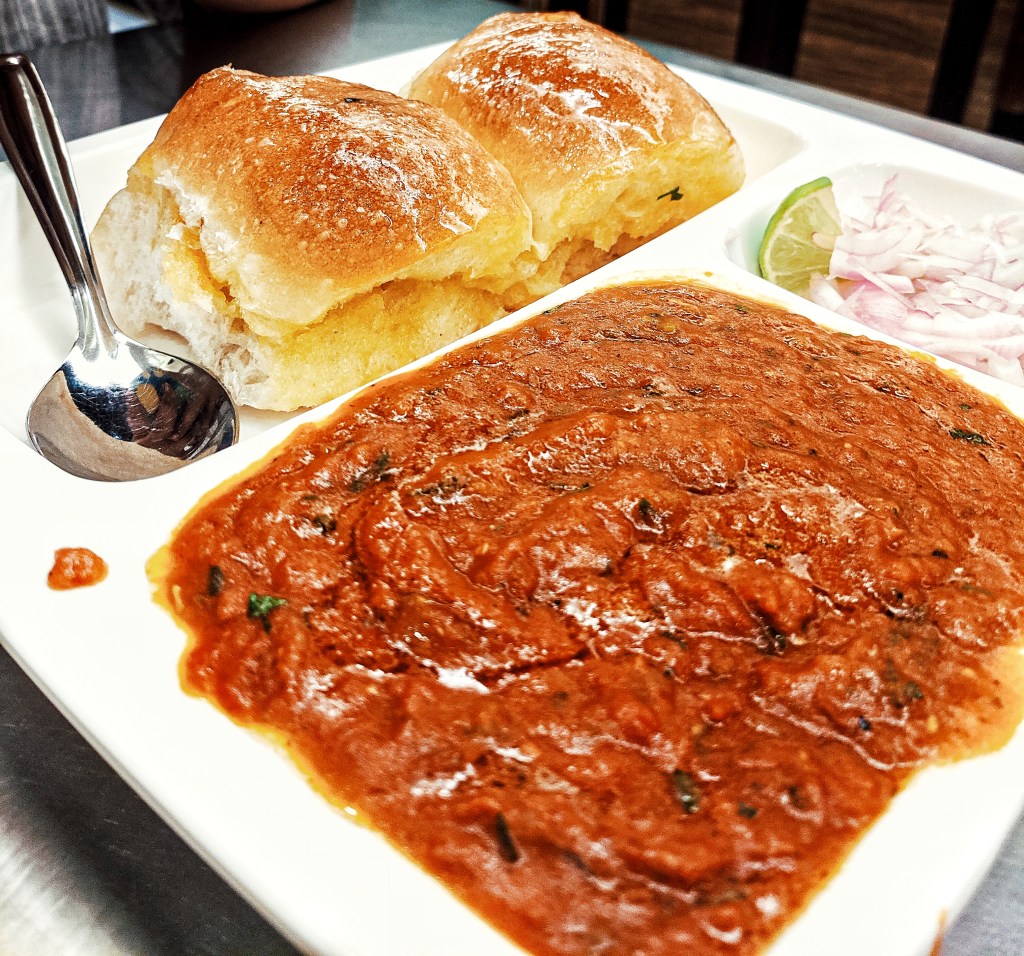
It’s a pure street dish, its origins something like lore: of vendors in their makeshift outdoor kitchens mashing together leftover sabzis, adding masala (the bhaji), and offering it up to mill workers and train commuters with a side of butter-soaked Portuguese buns (the pav). Over the years, it’s evolved and its flavor profiles expanded—Szechuan or Mexican Pav Bhaji, anyone?—but more or less stuck to the streets, udupis, and other cheap fast-food spaces. How do you translate this mush on to the menus of rarefied white tablecloth establishments? Answer: Very difficultly. Pav bhaji fondue is a thing in this world.

I enjoy those greasy, sloopy versions you’ll find on the streets, sure. They’re super spicy, burning hot, and a really good hangover cure. But it’s the home-made version I adore most.
Growing up, making pav bhaji was a process. My mom planned it all out in advance, for those days that are somewhere between mundane and occasion. These days, it’s got a more normal-day-cooking status, something to throw together within a few hours.

Making pav bhaji starts with washing and chopping and boiling all the vegetables. And I mean all. The foundation of this dish, as with much of Indian cuisine, is potatoes, but also tomatoes, onions, peas, ginger, green chili peppers, and garlic. My mom, of course, riffs of this, adding straggler veggies found in the corners of the fridge, or anything else she liked at the store: from cauliflower, zucchini, carrots, to eggplant, beetroot, radish, beans, and more. Thankfully, she’s never added karela (bitter gourd), and for that I’m eternally grateful.
Then, it’s time to mash it all up. If you’re ever pissed about something, I highly recommend pulverizing vegetables by hand. You’ll Hulk-smash all those negative feelings out of you, and get a bonus arm workout. This was probably the only time my mom got me to cook as a kid. We all chipped in to mash as we’d wander in and out of the kitchen to bug my mom about something or the other, as kids do. We’d climb up on the kitchen stool and feebly root around for big chunks of veggies to disintegrate until we got bored (about a minute, give or take).
There’s a saying in Hindi: haath ka khaana, loosely translated as having a hand in the food. It could be anything from adding some salt to chopping an onion to cooking the whole dish. Pav bhaji was, and still is, a haath ka khaana kind of meal.
At some point, the spices go in (pav bhaji has gotten its own commercialized mix, a good addition to anything/everything; I use it in my paneer bhurji these days), and butter. Then, the whole thing sits and simmers for nice long while, until you’re ready to toast the loved-up-with-butter pav on a griddle. We’re a pro-raw-onions family, so we wholeheartedly endorse having fresh onions, doused with lime juice, on the side.

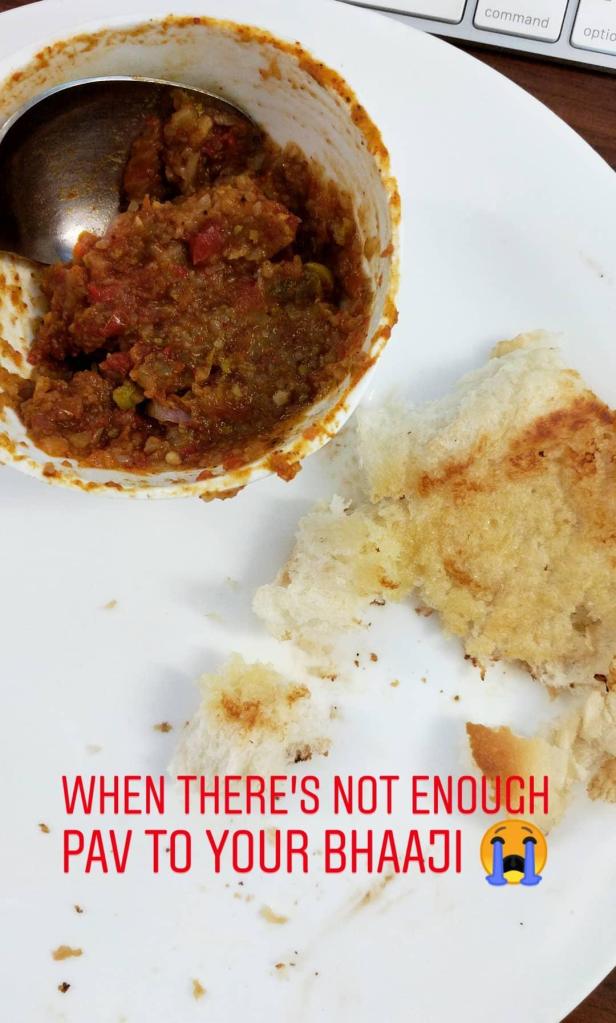


As you can guess, pav bhaji is big-batch cooking at its finest. My mom’s recipe—which I can’t share with you yet because I have to make it first—is always enough to feed 15 people. So it’s great for believers of leftovers and freezing food. Perfect for me, because I could eat it pretty much every day until it runs out.
When you think about it, about all the vegetables that go in and the fraction of ghee/butter you’ll use at home, it’s actually pretty healthy, and a good, fun, sloppy way to get picky people to eat all their veggies—like me when I hated tomatoes. It can also turn into a game, if you keep the final combination of vegetables a secret and everyone guessing until the first bites are had, the meal declared delicious, and take-backs impossible.
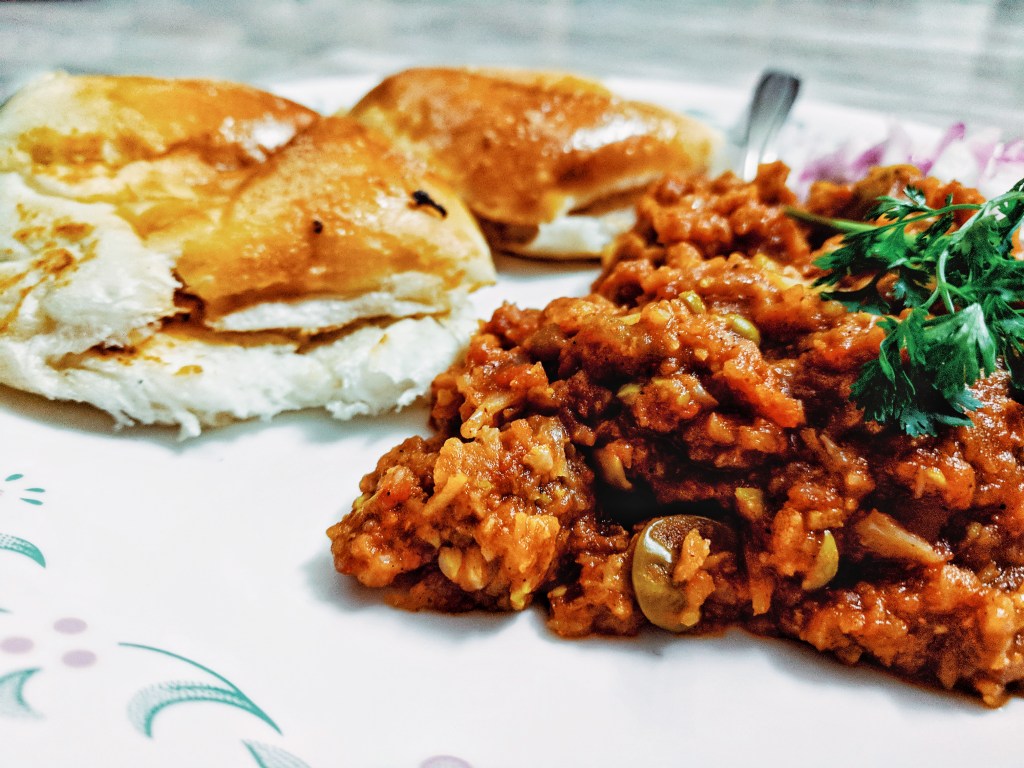
I don’t particularly know what I adore about pav bhaji so much. Is it the carb and butter fest? The origin story? That it was a special Indian treat for certain occasions? That it’s so fun to eat, and dissect? Is it the family aspect and the love that gets poured in when making it? Yes, yes, yes, yes, and yes.
And now I really miss it and want some. Damn.
 pass the pepper
woh I enjoy your blog posts, saved to favorites! .
LikeLiked by 1 person