We grew up with a healthy suspicion of restaurant sauces. Chutney, saunth, achar—the kinds that come in packets or in bowls in the center of the tables in restaurants—all of these were too soupy, too synthetically hued, and carried great risk of making us fall sick.
No, we turned up our noses at these, in favor of the homemade stuff. If you’ve ever lived in or visited an Indian household, you’ll know a good portion of the kitchen is dedicated to storing sauces of all kinds. My mother, for example, has an entire cabinet dedicated to giant jars of homemade achar: red chili, sweet mango, sour mango, spicy mango, tomato, plus a few others I’m probably forgetting. The freezer contains solid blocks of frozen chutneys, green and garlic-chili these days, while the fridge keeps thawed-out bottles and fresh saunth for immediate use.
The making of all of these is a sacred pastime—there’s a whole achar-making season, when my mother and grandmother just make batches and batches of the stuff to use through the rest of the year. They just put in the legwork for a radish one.
I pitched in last year, when I was still living with them, making two different kinds of mango achar—one sweet and one salty—under eagle eyes. It was one of the rare times they got me into the kitchen before I left India, and the results were pretty good, if I say so myself. Would I make the achars again, on my own, now, in the US? Until recently, I’d have said “No.”
What I will make happily, however, is chutney.
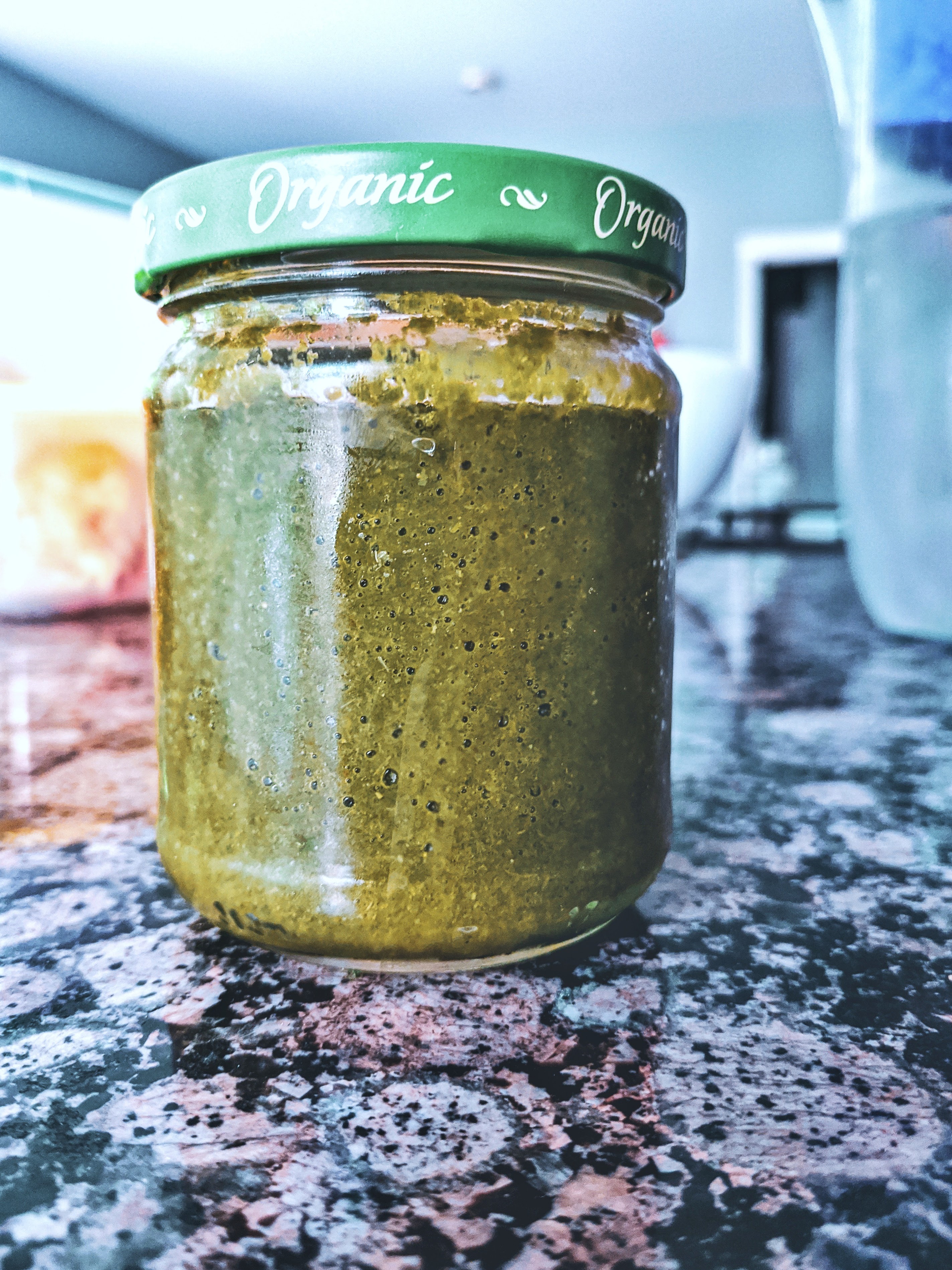
In my family, green coriander/cilantro (depending on which part of the world you’re in; I’m going to stick to cilantro) chutney is queen.
It’s spicy and tangy, a perfect complement for the chaat and pakoras we make. We also mix it in with toor dal, make mint raita with it, and even occasionally use it as a marinade.
(I recently even snuck about a teaspoon into the zhoug I was making. Don’t tell anyone.)
There are hundreds of variations of green chutney, but at the end of the day, the foundation is pretty simple: cilantro, nimbu (which is Hindi for both limes and lemons, so it gets confusing when you suddenly have access to both), and salt. Everything else is subjective. You can add chilies. You can add mint, to cut the sharpness of the chili and nimbu. You can add peanuts, or any other kind of nut, to add creaminess. You can add basil (which veers into pesto territory). You can add garlic. You can add coconut. You can add sugar. The combinations are endless.
This is the part where you ask for the recipe, but I’m not going to share an exact one. Not because it’s super secret, but because I genuinely don’t have an exact one. Like everything made in my family, it’s an inexact science, thrown together as the maker feels. And it somehow magically works out. Food, huh?
Here is what I put in, though:

Here’s the breakdown:
A whole bunch of cilantro, hardier stems chopped off. The stems towards the bottom of the stalks are a bit bitter, but will also add an unnecessary texture, so they’ve gotta go. Prepping the cilantro—washing, but also picking out the bad (aka slimy) leaves and stems—takes me forever, but I’m committed, because remember, this is also 100% raw. Pick those bad leaves out. I needed two whole bunches for the amount in that small jar (pictured), by the way.
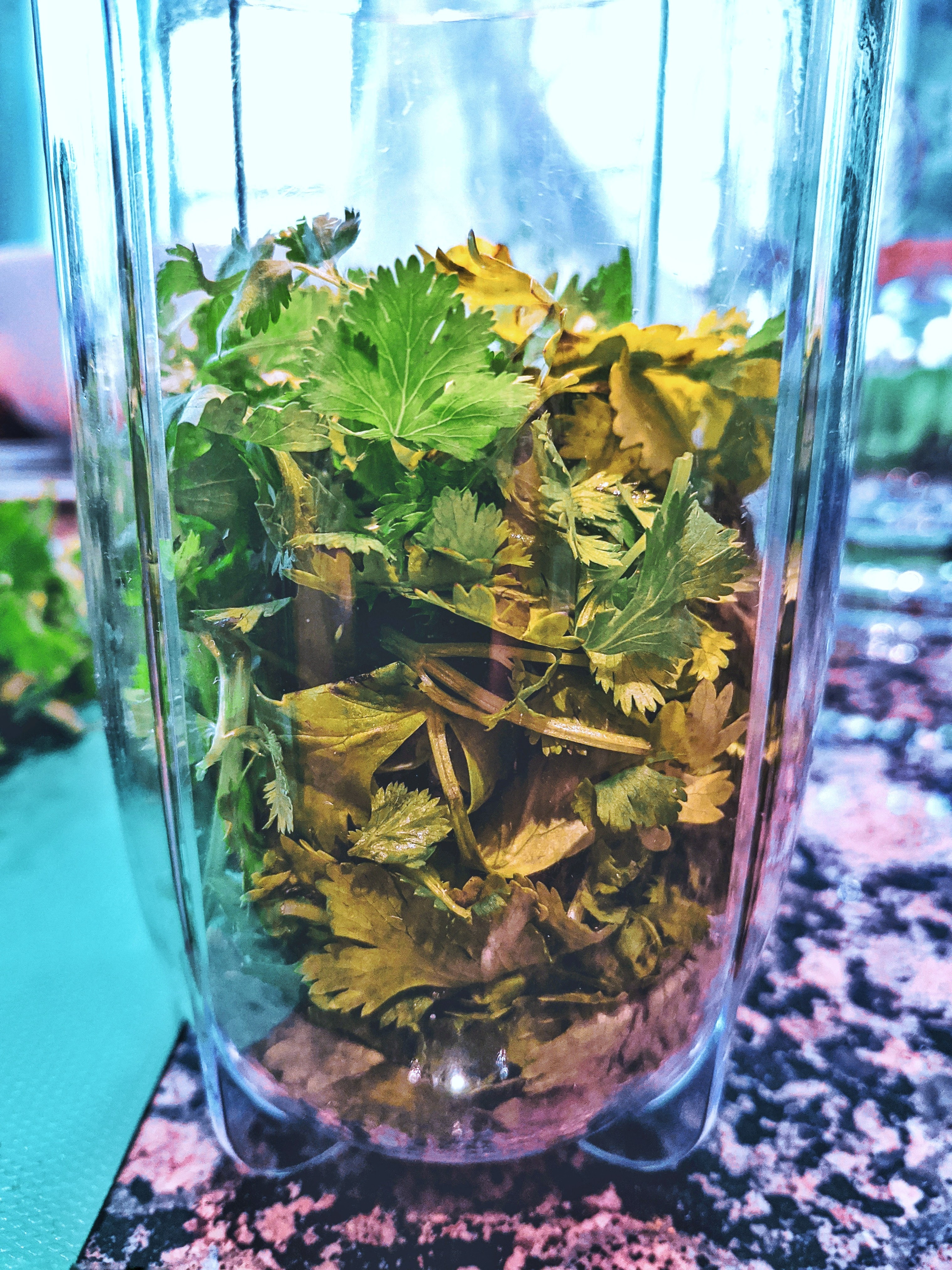
Half as much of that of fresh mint leaves. None of that dried mint/mint powder for us, thank you very much. This also happens to be optional, but take it from me, you’ll like adding this.

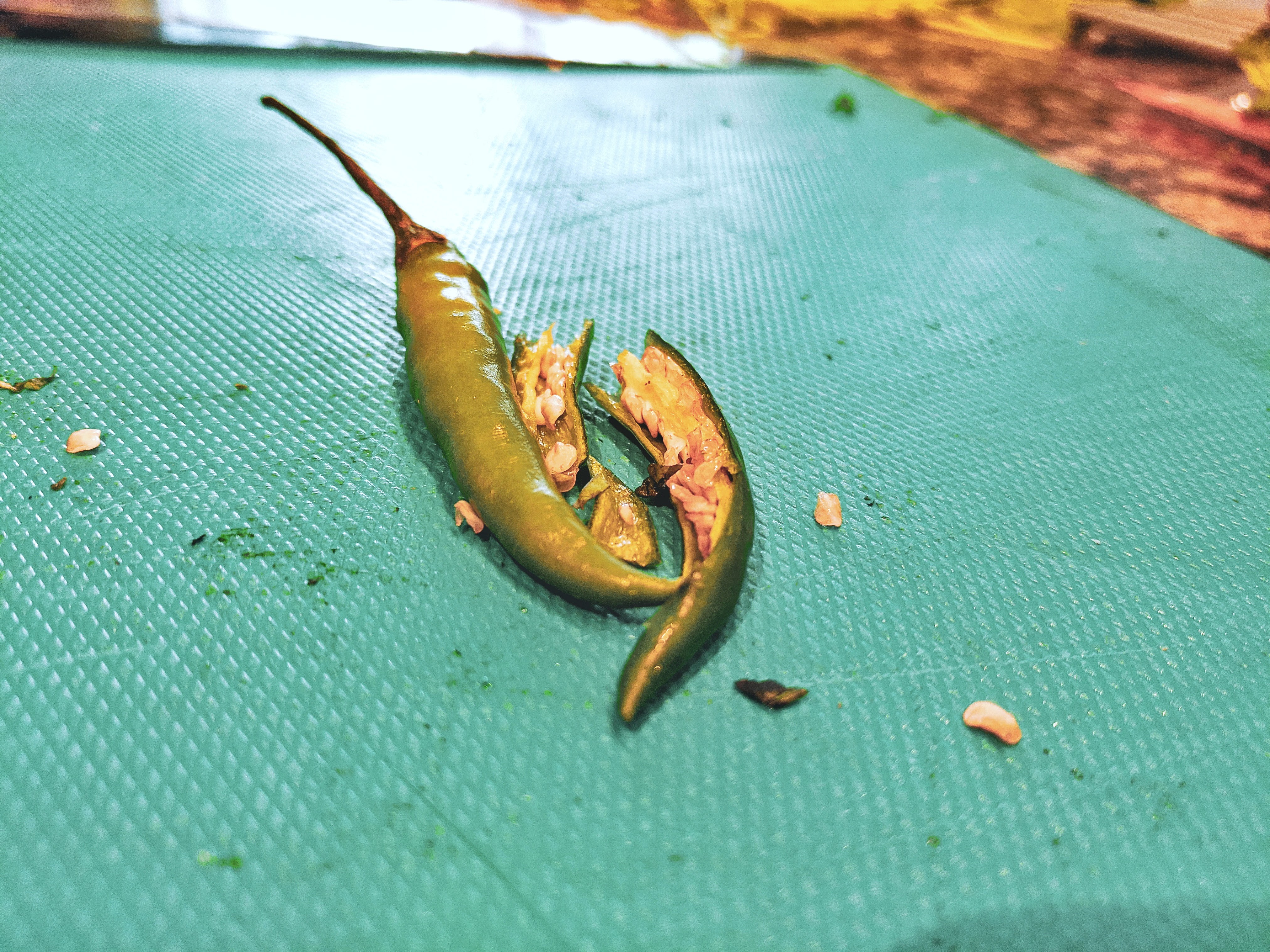
Green chilies. We use a minimum of four Thai green chilies, but I’ve been ramping up that amount recently (we love our spice, in case you missed it). I personally don’t use jalapeños, because my mom’s never used them, and I’m trying to replicate her version. But, hey, this is a non-recipe, so try it with any chili. Just, do me a favor and don’t use spice powder or flakes. Freshness is key.
Nimbu. The citrus I use to brighten up the chutney depends on whatever comes to hand first. Literally. But I never mix-and-match lemons and limes. Limes are more commonly available in India, so I err on the side of using those. Lemons will add a touch of sweetness.
Pinches of salt. I come from the school of Salt By Hand (not Salt Bae-style, but close enough), so I pretty much just add until I think I need to stop. Chutney isn’t meant to be super salty, but it should be seasoned.
A teensy, tiny bit of water. Everything’s more or less dry, and this is a sauce. Ergo, some water to make sure things can move around and be blended. Like soup.
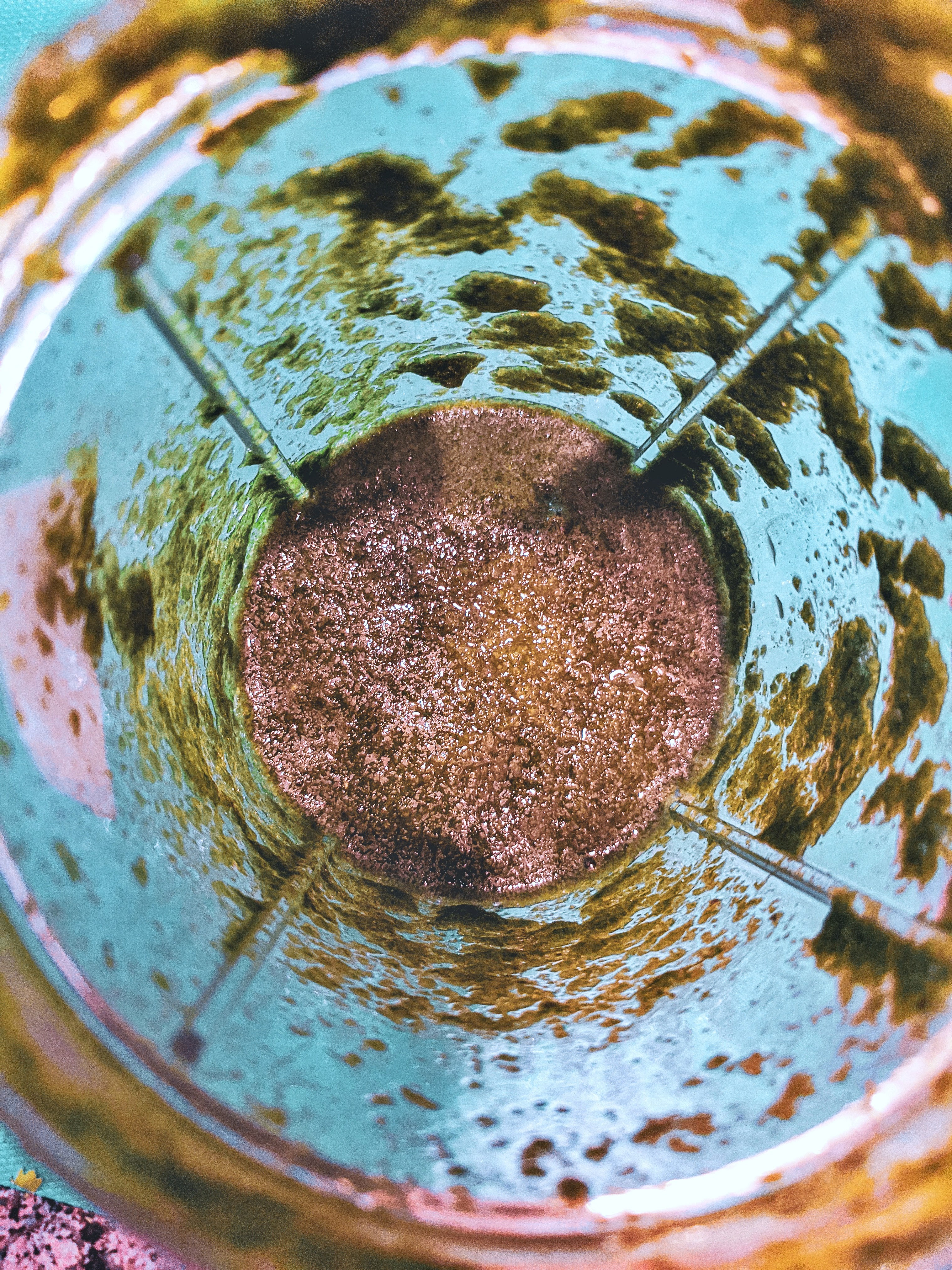
Here’s what everything might look like when you add it to the blender, or, in my case, the Nutribullet. Also, I just wanted to share the image because I love these top-down shots:
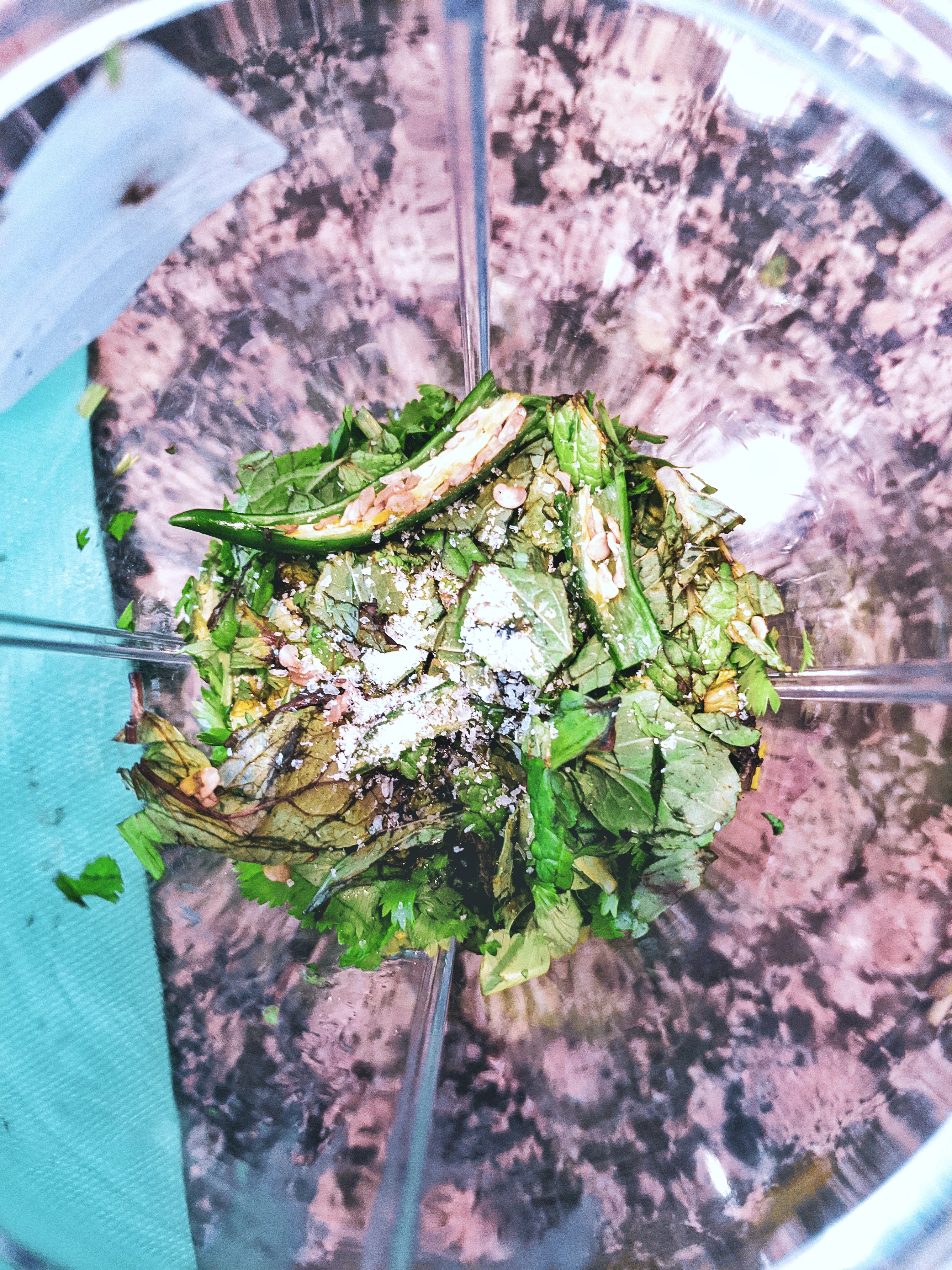
Then, you let it rip and blend until it’s a smooth green, well, chutney. The consistency you’re looking for: not too thin that it’s a juice, not too thick that it’s not spreadable. It should goop.
Tip: Keep tasting and tweaking in between.
The tasting and tweaking is genuinely my favorite part of cooking, when I get to experience firsthand the layers of flavor-building. It’s how I’m learning the before, in-between, and after of putting something together. (Yes, I lick the raw batter off the spoon once the batter’s in the oven.)
You’ll notice, if and when you make chutney, that you can absolutely stuff the blender, and come out with half (or less) the volume of finished stuff. The science-y side of me could explain the reactions taking place, when everything’s blended and all that air between the leaves and stems and seeds is all gone. But now I’m just rambling.
I’ve made this a bunch of times now, and because I don’t have a recipe, it’s come out differently each time. I don’t mind it, because I like the changes. That, and I’m still searching for my perfect, unique chutney taste.
Until then, you do you and experiment. Let me know how you make your chutney, or how this non-recipe recipe worked out for you. Spread it on everything and anything, freeze a chunk to happily find and thaw out weeks later. You’ll be really happy with it.
 pass the pepper